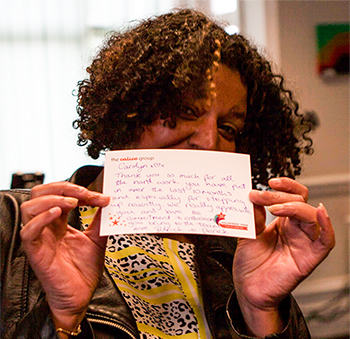
When BN arrived at Acorn, like many people, she had faced difficult experiences in her life and had found herself relying on ketamine as a way of coping.
Although she knew she needed support, taking the step into residential treatment felt daunting.
Reflecting on those early days, BN said:
“I was embarrassed about coming into rehab due to my ketamine problems. I thought no-one would understand.”
From the moment she arrived, the focus was on helping her feel welcomed, safe and valued. Working alongside staff, BN took an active role in shaping her recovery journey, developing new skills and strategies to help her navigate life’s challenges in healthier ways.
Through group work and therapeutic support, she explored experiences that had affected her confidence and wellbeing, while building a stronger sense of self-belief and hope for the future. As time went on, she grew in confidence, found her voice, and became more comfortable connecting with others who shared similar experiences.
Alongside her emotional recovery, BN received practical support to manage ongoing health concerns, ensuring she could fully engage in treatment while maintaining her comfort and dignity throughout her stay.
By the end of the 12-week programme, BN had developed new ways of coping, rebuilt her confidence, and was looking ahead with optimism. Most importantly, she had begun to believe in herself and the future she wanted to create.
Speaking about her experience, she said:
“Acorn made me feel comfortable, accepted and really supported me in the ways I needed. I didn’t think I had a future, but now I’m leaving with a happy, healthy new life.”
Recovery did not stop when BN left residential treatment. Drawing on her own experiences, she went on to establish a peer support group for women affected by ketamine use, creating a safe and understanding space where people can share their experiences and support one another.
She also became involved with a charity led by people with lived experience of recovery, providing encouragement and guidance to others beginning their own journeys.
BN said:
“I have been supported by Acorn through one-to-one sessions and group support. I was also introduced to people who had been through similar experiences and were now helping others. Today, I volunteer with a ketamine-specific charity and run weekly online support sessions to stay connected with people who are looking for support, have already stopped using, or simply want to talk to someone who understands.”
Today, women leaving rehabilitation are routinely signposted to the support group BN created, helping them stay connected, build supportive relationships and reduce the sense of isolation that can sometimes be experienced in early recovery.
BN’s story is a powerful reminder that recovery is about more than stopping substance use. It is about rebuilding confidence, finding connection, and discovering a renewed sense of purpose.